

Table of Contents
ToggleFinding a gaming headset that doesn’t compromise on quality while staying under $100 feels like hunting for loot in a barren dungeon. Most budget options sound tinny, break after a few months, or feel like wearing a vice grip during marathon sessions. But the Astro Gaming A10 has been quietly carving out a reputation as the exception to the rule since its launch, and in 2026, it’s still punching well above its weight class.
What started as Astro’s entry-level offering has evolved into a go-to recommendation for gamers who want reliable audio, tank-like durability, and genuine comfort without dropping competitive headset cash. Whether you’re grinding ranked matches, coordinating callouts in tactical shooters, or just looking for a headset that won’t fall apart after six months, the A10 deserves serious consideration. This review breaks down everything that makes it a standout, and where it falls short.
Key Takeaways
- The Astro Gaming A10 delivers exceptional build quality and durability at $59.99, with a steel-reinforced frame and cloth ear cups that outlast most budget competitors.
- Balanced, accurate audio tuning and open-back design provide superior positional audio for competitive gaming, though bass response is conservative compared to bass-heavy alternatives.
- The A10’s universal 3.5mm connectivity and plug-and-play simplicity work seamlessly across PC, PlayStation, Xbox, Nintendo Switch, and mobile devices without software dependencies.
- A reliable flip-to-mute boom mic and breathable cloth ear cups make extended gaming sessions comfortable, though the open-back design leaks sound and isn’t suitable for public spaces.
- The Astro Gaming A10 stands out as the smarter choice for competitive players prioritizing durability and clarity over RGB lighting and customization features found in rivals like the HyperX Cloud Stinger and Razer Kraken X.
What Makes the Astro A10 Stand Out in the Crowded Gaming Headset Market
The budget gaming headset space is a minefield of disposable plastic and hollow marketing promises. The Astro A10 cuts through that noise by doing something unusual: it doesn’t try to be everything to everyone.
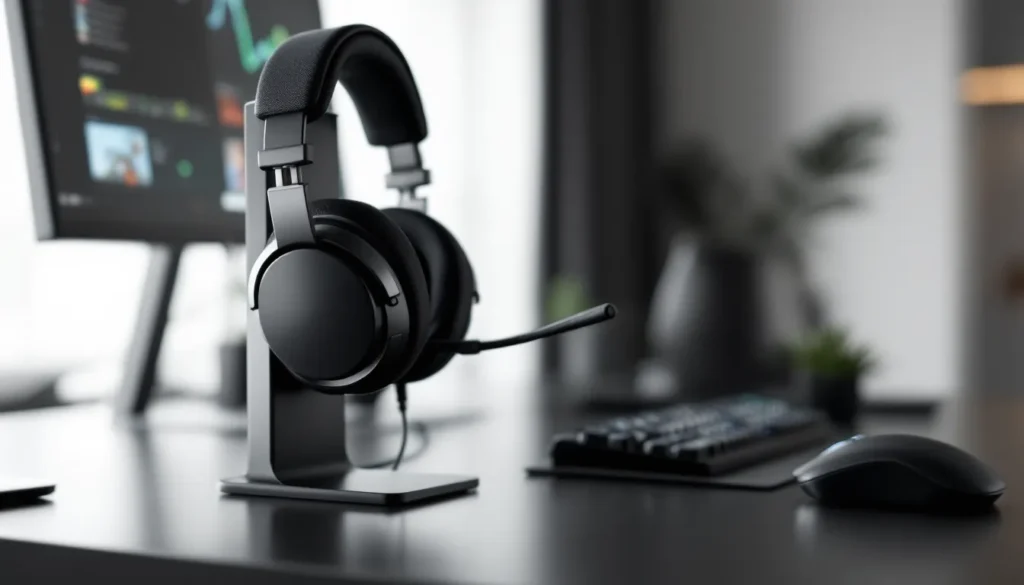
Instead of cramming in RGB lighting, virtual surround sound gimmicks, or flimsy software dependencies, Astro focused on the fundamentals. The A10 is a wired, analog headset with 40mm neodymium drivers, a flip-to-mute boom mic, and a build that prioritizes longevity over flash. It’s the kind of design philosophy that appeals to players who’d rather invest in something that works for years than chase the latest trend.
The headset launched at $59.99 USD, positioning it directly against the HyperX Cloud Stinger and Razer Kraken X. But while those competitors often lean on brand recognition, the A10 earned its reputation through word-of-mouth in competitive circles. Players noticed it could take a beating, sounded clean for the price, and didn’t need babying.
What’s interesting is how Astro’s pedigree as a premium audio brand trickles down here. The A10 uses tuning lessons learned from the A40 and A50 lineups, giving it a sound profile that’s surprisingly cohesive for a budget headset. There’s no bloated bass trying to fake immersion, no shrill treble that fatigues your ears after an hour. It’s just balanced, functional audio that lets you focus on the game.
Design and Build Quality: Durability Meets Comfort
Materials and Construction
The A10’s build quality is where it immediately separates itself from the pack. The headband is a damage-resistant polycarbonate and wrapped steel frame that flexes without snapping. Twist it, drop it, toss it in a bag, this thing shrugs off abuse that would kill most sub-$100 headsets.
Astro went with an open-back design for the ear cups, which are lined with cloth-covered memory foam. The padding isn’t the plushest you’ll find, but it breathes well and doesn’t degrade into flaky synthetic leather after a year. The hinges are reinforced metal, not the brittle plastic joints that crack on cheaper alternatives.
The unidirectional 6.0mm boom microphone is integrated into a flexible arm that flips up to mute. There’s a satisfying click when it locks into position, and the mute function is purely mechanical, no software or inline controls to fail. The 3.5mm cable is detachable, running about 6.5 feet with an inline volume dial. Losing or damaging the cable doesn’t brick the headset, which is a surprisingly rare feature in this price range.
Comfort for Extended Gaming Sessions
Comfort is subjective, but the A10 handles long sessions better than you’d expect for a headset this affordable. The clamping force is moderate, tight enough to stay secure during head movements but not so aggressive that it triggers headaches after two hours.
The cloth ear cups are the MVP here. They don’t trap heat like leatherette, which matters when you’re deep into a five-hour raid or grinding through a battle pass. The cups are spacious enough for medium-to-large ears, though users with especially large ears might find them slightly shallow.
The headband padding is minimal, which can be a pressure point for some users. If you’ve got a larger head or tend to notice headband weight, the A10 might feel a bit firm at first. But the steel frame distributes weight more evenly than pure plastic designs, and most players report the fit “breaks in” after a week or so of regular use.
One quirk: the open-back design means sound leaks out. It won’t bother you, but anyone nearby will hear your game audio clearly. It’s not a headset for public spaces or shared rooms where noise bleed matters.
Audio Performance: How the A10 Delivers Immersive Gaming Sound
Soundstage and Positional Audio
The A10 doesn’t use virtual surround sound processing, and that’s actually a strength. The stereo imaging from the 40mm drivers is clean and accurate, giving you reliable directional cues in competitive shooters. Footsteps in Valorant, distant gunfire in Warzone, or enemy positioning in Apex Legends, the A10 handles spatial awareness without artificial processing muddying the signal.
The soundstage is wider than most closed-back budget headsets, thanks to the open-back design. You get a more natural, room-like audio presentation that doesn’t feel compressed or claustrophobic. This makes it solid for single-player games with strong sound design too. Elden Ring, Resident Evil 4 Remake, and narrative-driven titles benefit from that extra breathing room.
It’s worth noting that the open-back design does sacrifice some low-end punch compared to closed-back competitors. If you’re used to bass-heavy headsets, the A10 might feel slightly lean at first. But that trade-off gives you better clarity in the mids and highs, which is more useful for competitive play where hearing subtle audio cues matters more than feeling explosions rumble.
Bass, Mids, and Treble Balance
Astro tuned the A10 with a frequency response of 20Hz–20kHz, and the balance leans toward accuracy over excitement. The bass is present but controlled, enough to give weight to explosions and engine roars without drowning out dialogue or footsteps. It’s not a basshead’s headset, but competitive players will appreciate the restraint.
Mids are clear and forward, which is crucial for voice chat and in-game callouts. Teammates come through intelligibly even during chaotic firefights, and NPC dialogue doesn’t get lost in the mix. The treble is bright without being harsh, though extended sessions with particularly treble-heavy games (or poorly mixed streams) can occasionally edge toward fatigue.
Compared to the exaggerated V-shaped tuning common in budget gaming headsets, the A10’s flatter response might feel underwhelming at first. But once you adjust, the clarity becomes addictive. You stop chasing artificial bass and start noticing details, reloads, ability cues, environmental sounds, that other headsets smear together.
Microphone Quality: Clear Communication for Team Play
The A10’s 6.0mm unidirectional boom mic is one of the best in the budget category. It’s not going to replace a dedicated streaming mic, but for in-game comms and Discord calls, it’s more than serviceable.
The frequency response is tuned for voice clarity, cutting through background noise reasonably well without any active noise cancellation. Teammates consistently report clean, natural-sounding audio with minimal distortion. The unidirectional pattern does a solid job rejecting sound from the sides and rear, so keyboard clacks and mouse clicks don’t dominate your comms.
The flip-to-mute mechanism is simple and reliable. Flip the boom up past 45 degrees, and it mutes with a physical click. No fumbling for inline buttons or relying on software toggles that might fail mid-callout. It’s the kind of mechanical solution that just works, match after match.
One downside: the mic arm is flexible but not removable. If you exclusively use an external mic and want a cleaner look, you’re stuck with the boom. And because there’s no software suite, you can’t apply EQ or noise gate filters. What you get is what you get, but what you get is consistently good for the price.
Compatibility Across Platforms: PC, Console, and Mobile Gaming
PlayStation and Xbox Compatibility
The A10 works natively with **PlayStation 4, PlayStation 5, Xbox One, and Xbox Series X
|
S** via the standard 3.5mm controller jack. No adapters, no firmware updates, no platform-specific variants to worry about. Plug it into your DualSense or Xbox controller, and you’re live.
On PlayStation 5, the A10 delivers clean audio through the controller’s 3D Audio engine when compatible games support it. You won’t get the same immersion as Sony’s Pulse 3D headset, but the spatial processing still enhances titles like The Last of Us Part II or Returnal. Xbox Series X
|
S users get identical plug-and-play functionality with Windows Sonic or Dolby Atmos pass-through if you’ve purchased a license.
The inline volume control sits on the cable about eight inches down, making it easy to adjust on the fly without reaching for system menus. It’s analog, so adjustments are smooth and instantaneous, no digital stepping or lag.
PC and Nintendo Switch Setup
PC setup is as simple as it gets. The A10 uses a standard TRRS 3.5mm connector, so it works with any motherboard audio jack, USB sound card, or external DAC/amp. Plug it in, set your default playback and recording devices in Windows or macOS, and you’re done. No drivers, no software bloat.
Major testing sites and hardware reviewers consistently praise the A10’s zero-configuration approach, especially for users who don’t want to deal with finicky software suites. It’s just audio in, audio out.
For Nintendo Switch, the A10 works in both docked and handheld modes. In handheld, plug it directly into the Switch’s 3.5mm jack. In docked mode, you’ll need a controller with a 3.5mm port (like the Pro Controller) or a USB-to-3.5mm adapter for your dock. Either way, it’s seamless once connected.
Mobile Gaming on the Go
The A10’s 3.5mm connection makes it compatible with any smartphone or tablet that has a headphone jack, or supports one via USB-C or Lightning adapter. For mobile gamers grinding PUBG Mobile, Call of Duty: Mobile, or Genshin Impact on the go, the A10 provides a noticeable upgrade over earbuds or built-in speakers.
The cable length (about 6.5 feet) is a bit excessive for mobile use, so expect some cable management. But the detachable design means you could theoretically swap in a shorter aftermarket cable if you wanted. The inline volume control remains handy for quick adjustments without diving into game menus.
One caveat: the open-back design isn’t ideal for public spaces. If you’re gaming on a bus or in a coffee shop, everyone around you will hear your game audio. It’s a headset designed for home use first, mobile second.
Key Features and Specifications Breakdown
Here’s what you’re getting under the hood:
Audio
- Drivers: 40mm neodymium
- Frequency Response: 20Hz–20kHz
- Impedance: 32 ohms
- Sound Design: Open-back, stereo (no virtual surround)
Microphone
- Type: Unidirectional boom mic, 6.0mm
- Frequency Response: 100Hz–10kHz (voice-optimized)
- Mute: Flip-to-mute mechanical switch
Build and Design
- Headband: Damage-resistant polycarbonate with wrapped steel frame
- Ear Cups: Cloth-covered memory foam, open-back
- Hinges: Reinforced metal
- Weight: Approximately 246 grams (varies slightly by color variant)
Connectivity
- Cable: Detachable 3.5mm TRRS, 6.5 feet (2 meters)
- Inline Controls: Volume dial
- Compatibility: PC, Mac, PS4, PS5, Xbox One, Xbox Series X
|
S, Nintendo Switch, mobile devices with 3.5mm or adapter
Availability
- MSRP: $59.99 USD (as of 2026)
- Color Variants: Black/Red, Black/Blue, Navy/White, Grey/Blue (availability varies by retailer)
- Warranty: 1-year limited warranty from Astro Gaming
The specs aren’t flashy, but they’re honest. Independent testing from audio equipment specialists confirms that the A10 delivers on its stated frequency response and impedance, which isn’t always the case in the budget tier. No inflated specs, no misleading marketing, just straightforward performance metrics that match real-world use.
Astro A10 vs. Competitors: How Does It Compare?
A10 vs. HyperX Cloud Stinger
The HyperX Cloud Stinger is the A10’s closest competitor, often priced within $10 either way depending on sales. Both target budget-conscious gamers who prioritize build quality and sound over features.
Build: The Stinger uses a plastic frame that’s lighter but less durable than the A10’s steel-reinforced design. The A10 feels more robust and handles drops better, but the Stinger’s lighter weight might appeal to users sensitive to headset mass.
Audio: The Stinger has a closed-back design with slightly punchier bass, while the A10’s open-back offers a wider soundstage and better positional audio. For competitive FPS players, the A10 edges ahead. For single-player immersion and bass response, the Stinger holds its own.
Mic: Both have flip-to-mute boom mics with similar quality. The Stinger’s is slightly more flexible, but the A10’s unidirectional pattern rejects background noise a bit better.
Comfort: The Stinger’s lighter weight and softer headband padding give it an edge in long-session comfort for some users. The A10’s cloth ear cups breathe better, but the headband can feel firmer.
Verdict: If durability and competitive audio are top priorities, the A10 wins. If you want more bass and lighter weight, consider the Stinger.
A10 vs. Razer Kraken X
The Razer Kraken X usually sits around $50–$60 and brings Razer’s brand recognition to the table. It’s a direct competitor in price and target audience.
Build: The Kraken X uses a primarily plastic construction that’s lighter than the A10 but also feels more fragile. The A10’s metal-reinforced frame is noticeably more durable in long-term use.
Audio: The Kraken X has a closed-back design with emphasized bass, great for immersive single-player but less accurate for competitive play. The A10’s balanced tuning provides clearer mids and better directional cues. Technology outlets like TechRadar have noted the A10’s superior imaging in comparison tests.
Mic: The Kraken X’s mic is bendable but not removable, and quality is comparable to the A10. Both handle voice comms well, though the A10’s flip-to-mute is more intuitive than the Kraken X’s inline mute button.
Comfort: The Kraken X is lighter and has plush leatherette padding that feels softer initially but traps heat. The A10’s cloth ear cups are cooler over long sessions but might feel less luxurious at first.
Software: The Kraken X supports Razer Synapse for EQ and mic adjustments, while the A10 has no software. That’s either a pro (no bloatware) or a con (no customization) depending on your preference.
Verdict: For competitive players who value accuracy and build quality, the A10 is the smarter buy. If you want more bass and software tweaking options, the Kraken X is worth considering.
Pros and Cons: Is the Astro A10 Right for You?
Pros:
- Exceptional build quality for the price, steel-reinforced frame and durable materials
- Balanced, accurate audio tuned for competitive gaming and clear positional cues
- Reliable flip-to-mute boom mic with good voice clarity and background noise rejection
- Cloth ear cups that breathe well and resist degradation over time
- Universal compatibility, works with PC, PlayStation, Xbox, Switch, and mobile with no setup
- No software dependencies, plug-and-play simplicity that just works
- Detachable cable prevents total failure if the cable gets damaged
- Affordable MSRP at $59.99 with frequent sales driving it lower
Cons:
- Minimal headband padding can cause pressure points for some users, especially during extended sessions
- Open-back design leaks sound, not suitable for shared spaces or public use
- Bass response is conservative, won’t satisfy bassheads or those used to V-shaped tuning
- No software or EQ options, you’re stuck with the out-of-box tuning
- Non-removable mic arm, can’t be detached even if you use an external mic
- Cable length (6.5 feet) is excessive for mobile gaming and can feel awkward without management
- Clamping force might feel tight during the first few days before the frame adjusts
The A10 isn’t perfect, but its strengths far outweigh its limitations for the target audience. If you’re chasing RGB bling, booming bass, or software customization, this isn’t your headset. But if you want something that sounds good, lasts years, and doesn’t get in the way, it’s hard to beat at this price.
Who Should Buy the Astro Gaming A10 Headset?
The A10 hits a specific sweet spot, and knowing whether you’re in that zone makes the buying decision easy.
Buy the A10 if you:
- Play competitive multiplayer games where audio accuracy and footstep tracking matter (Valorant, CS2, Apex, Warzone)
- Want a headset that will last beyond the typical 6–12 month lifespan of cheap alternatives
- Prefer plug-and-play simplicity over software suites and configuration headaches
- Game across multiple platforms and don’t want to buy separate headsets for console and PC
- Prioritize breathability and hate sweaty leatherette ear cups during long sessions
- Need reliable voice comms without investing in a separate microphone
- Have a tight budget but refuse to compromise on core audio and build quality
Skip the A10 if you:
- Demand heavy bass for immersive single-player or music listening
- Game in shared spaces where sound leakage from open-back design is a dealbreaker
- Want software customization, EQ presets, mic filters, RGB control
- Need a detachable mic for a cleaner aesthetic when using external audio
- Prefer ultra-lightweight designs or have sensitivity to clamping force
- Already own a premium headset and are looking for a meaningful upgrade (the A10 is a budget champ, not a flagship contender)
The A10 is a workhorse headset for players who value function over flash. It’s the kind of gear that fades into the background because it just works, session after session, month after month. If that resonates, it’s a no-brainer buy.
Tips for Getting the Most Out of Your Astro A10
1. Break in the headband fit gradually.
If the clamping force feels too tight out of the box, gently stretch the headset over a box or stack of books overnight. The steel frame will adjust slightly without damaging the structure.
2. Adjust in-game audio settings for competitive clarity.
Since the A10 has flat tuning, dial down music and ambient audio sliders in competitive shooters. Boost dialogue and effects channels to maximize the headset’s strength in delivering clear positional cues.
3. Use a shorter aftermarket cable for mobile gaming.
The stock 6.5-foot cable is overkill for phones and tablets. Swap it for a 3–4 foot TRRS cable (under $10) to reduce clutter and improve portability.
4. Keep the ear cup fabric clean.
Cloth ear cups resist flaking but can accumulate oils and dust. Wipe them down weekly with a slightly damp microfiber cloth. For deeper cleaning, remove the cups (if your model allows) and hand-wash with mild soap.
5. Leverage spatial audio on supported platforms.
On PlayStation 5, enable 3D Audio in system settings. On Xbox Series X
|
S or PC, activate Windows Sonic (free) or Dolby Atmos (paid license) to enhance the A10’s already solid soundstage. The headset’s clean stereo imaging translates well to spatial processing.
6. Position the boom mic close to your mouth.
The unidirectional pattern works best when the mic is about one to two inches from the corner of your mouth. Too far away and you’ll sound distant: too close and you might clip during loud callouts.
7. Store it properly when not in use.
Drape the A10 over a headset stand or hook rather than leaving it coiled up. The open-back design and steel frame are durable, but proper storage prevents cable kinks and maintains the fit tension.
8. Check for firmware or cable updates from Astro (unlikely but worth noting).
While the A10 doesn’t require software, Astro occasionally releases improved replacement cables or limited-edition color variants. Keep an eye on their official site if you want to refresh the look or upgrade the cable down the line.
Conclusion
The Astro Gaming A10 remains one of the smartest buys in the budget headset tier heading into 2026. It doesn’t chase trends or dazzle with marketing gimmicks. Instead, it delivers what competitive and casual gamers actually need: accurate audio, rock-solid build quality, clear comms, and universal compatibility.
You won’t find RGB lighting, wireless connectivity, or software-driven EQ here. What you will find is a headset that works flawlessly across PC, console, and mobile, survives years of daily abuse, and costs less than a AAA game at launch. For players who’d rather spend money on games than replace broken peripherals, that’s a compelling value proposition.
If you’re in the market for a reliable, no-nonsense gaming headset under $100 and can live with the open-back design’s trade-offs, the A10 is still one of the best options available. It’s the kind of gear you buy once and forget about, because it just keeps working.